
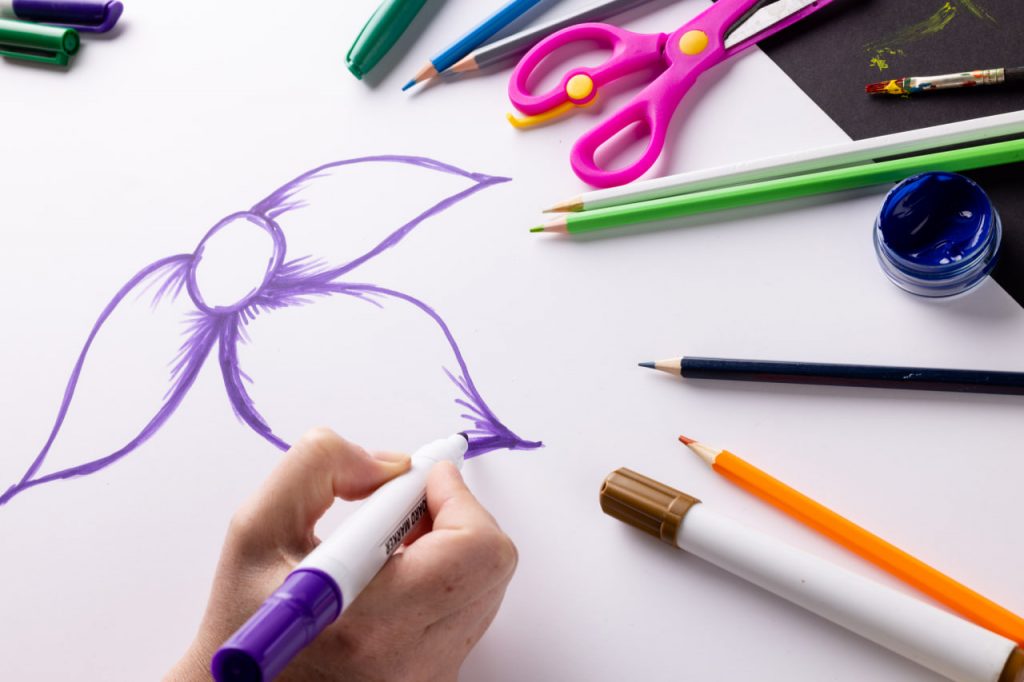
Most artists started by copying others. They learned through copying, they referenced others to hone their craft, and they emulated those they admired. The problem is that copying is the mark of a student. Finding your unique style is what sets you apart as an artist. It’s a reflection of your personality, your life experiences, and your worldview. It’s the way you turn technical proficiency into a form of self-expression.
By recognizing the relationship between imitation and innovation, artists can study productively and slowly become accustomed to their unique voice. It is a process of seeing, testing, and understanding.
Children Learn by Imitation
Observation is a fundamental tool for an artist. You learn so much by observing the work of other experienced artists, in terms of composition, technique, color usage, and emotion.
Master Study
Try to copy a piece of art whether it be a painting, drawing, or a digital piece. It will help you get a feel for proportions, values, and design. Try to understand the intent behind what the artist was trying to do rather than just copying the surface details.
Practice Regularly Repetition builds muscle memory and confidence. Daily sketching, study exercises, and experimenting with different mediums ensure that technical skills become second nature. Regular practice also reveals personal preferences, which contribute to your evolving style.
Trial and Error
It is important to develop a style, which means going beyond copying and trying out other things.
Combine different influences to form new techniques. Try combining different line qualities, color schemes, texture, or perspective. This will help you to experiment and hone in on what works for you.
Medium
Play with pencils, inks, watercolors, computer, and mixed media. Each medium will allow you to express yourself in a different way and you will see what’s the best way to communicate your message.
Step 5: Experiment with Different Subjects
Find subject matters that inspire you whether it’s nature, cities, abstract ideas or people. The more you draw your favourite subjects, the more you will discover about the style you like and the more defined your style will become.
Knowing Your Tastes
Finding your personal style relates back to understanding your creative preferences.
Favorite Methods
Pay attention to the methods you enjoy using or seem to be more innate. Perhaps you are a heavy painter, using bold brush strokes, or maybe you are more of a fine detail artist, using line and shade. Knowing what your strong suits are will help you concentrate on those skills, and those are the things that set your work apart from others.
Color and Composition Preferences. Notice if you have a tendency towards specific colors, composition or layout. It could become part of your signature style.
Focus 2: Emotional and conceptual. We all tend to lean towards certain types of emotions, stories or ideas when making art. Identifying these will help you create a cohesive body of work, and make your art speak with a strong, clear voice.
Polish and Consistency
Style is a constant evolution.
Practice, Practice, Practice: Do several versions of the same subject or technique to refine your method. Critique each one to determine what works well and what doesn’t.
Receiving and Incorporating Feedback: Request feedback from mentors, peers, or forums. Reflecting on critiques is useful for recognizing trends in your writing and gives suggestions for improving style.
Body of Work: A body of work aids the cohesiveness of your style. If you consistently produce work with similar themes, techniques and colors over the years then you will be more likely to be identified as such. This does not mean you have to repeat yourself but continue to explore and evolve in your signature way.
Mistakes to Avoid
Mimicking Others Too Closely
Understanding the importance of imitation is key, but too much of it will stifle your creativity. Try to blend your influences with your own decisions as you go to ensure that your work doesn’t appear copied.
Fear of Experimentation
A lot of artists are afraid to experiment because they might fail. To innovate, you need to take risks and you can always learn from experiments that don’t work out the way you want.
Impatience. Style takes time to develop. Trying to force the issue will only give you “inconsistent” or “contrived” results. Be patient. Keep working. Keep trying.
Accepting change
Your artistic style changes over time. Your abilities get better, you have more experience and you see things differently as time passes. Don’t hold on to old ways of doing things. It is ok to try new things, to keep practicing and to change. This is what will keep your art interesting and original.